Before choosing a walker or rollator, identify the person’s main need. Are they looking for strong physical support, help with balance, the ability to walk longer distances, or a combination of these? The right choice depends on safety, strength, endurance, balance, and where the device will be used most often.
When a Standard Walker May Be the Better Choice
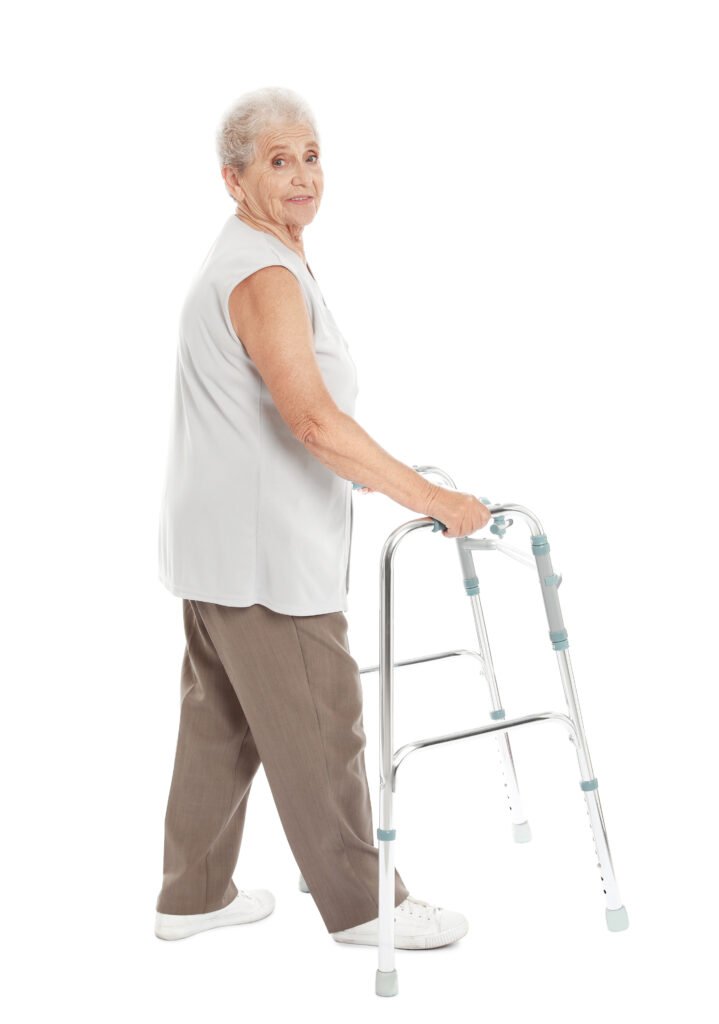
A standard walker is usually the better option when a person needs strong support and maximum stability.
Consider a standard walker if the person:
- Has significant leg weakness
- Needs to support part of their body weight with their arms
- Has unsteady balance or a high risk of falling
- Is recovering from surgery, illness, or injury
- Has been told to limit weight-bearing on one leg
A traditional walker with four legs provides the most stability because it stays firmly on the ground. However, it must be lifted and moved forward with each step, which requires some upper-body strength and coordination.
When a Rollator May Be the Better Choice
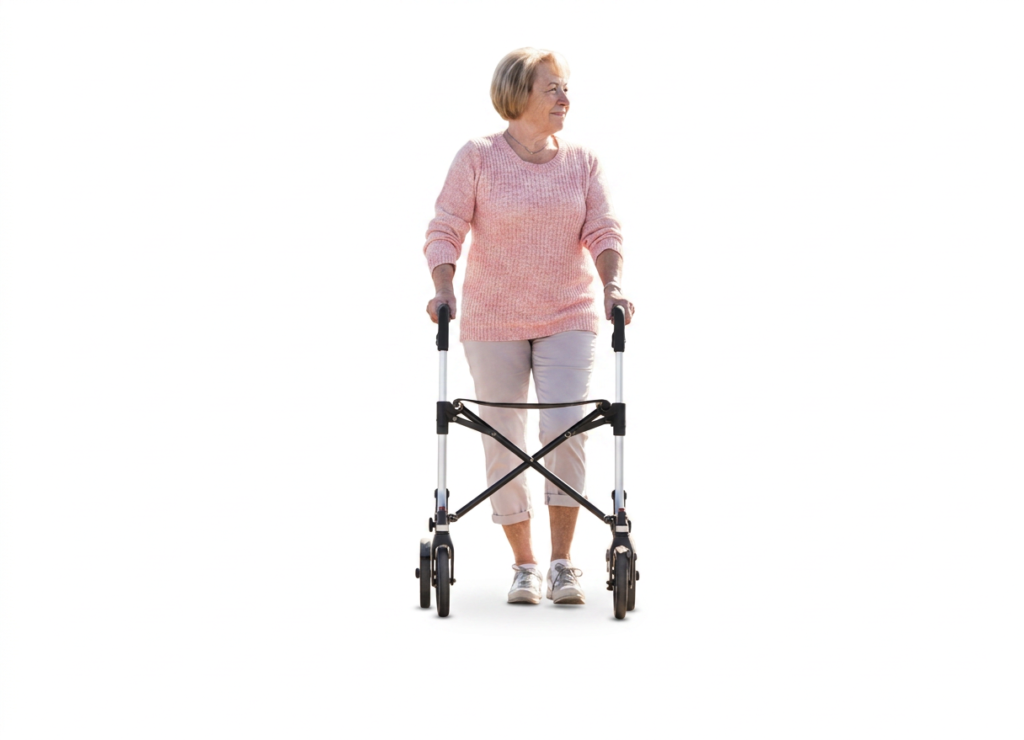
A rollator, sometimes called a wheeled walker, may be better for someone who can walk but tires easily or needs help moving more smoothly.
Consider a rollator if:
- The person can walk but becomes fatigued quickly
- Balance is mildly impaired, but full weight-bearing support is not needed
- The person needs to rest often while walking
- Longer distances, shopping, appointments, or outdoor walking are part of the routine
- The person can safely use the hand brakes and control speed
Rollators usually have wheels, hand brakes, a seat, and storage. They allow for a smoother, more natural walking pattern and can be helpful for longer outings. However, they are not designed for someone who needs to lean heavily on the device for support.
Key Differences Between Walkers and Rollators
The main difference is stability versus mobility.
A walker provides more stability, but it requires more effort because it must be lifted or advanced carefully. It is often safer for someone who is weak, unsteady, or at higher risk of falling.
A rollator is easier to move and can reduce fatigue, but it is less stable if the person leans on it too heavily. It also requires the ability to use brakes properly and control the pace of walking.
In simple terms:
- A walker offers stronger support.
- A rollator offers easier movement.
- A two-wheeled walker can be a useful middle option.
Consider Where It Will Be Used
The living environment matters.
Inside the home, a standard walker may be easier to manage in tight spaces, narrow hallways, bathrooms, and smaller rooms. A two-wheeled walker may also work well indoors because it is easier to move than a standard walker but more stable than a rollator.
Outside the home, a rollator may be more useful for longer walks, medical appointments, shopping trips, and uneven surfaces. For outdoor use, larger wheels and good hand brakes are especially important.
In general, walkers are often better for confined indoor spaces, while rollators are often better for longer distances and outdoor movement.
Fit Matters More Than Most People Realize
A poorly fitted walker or rollator can increase the risk of falls, pain, and poor posture.
The handles should usually be around wrist height when the person is standing upright with arms relaxed at their sides. When holding the handles, the elbows should be slightly bent. The person should be able to stand tall rather than leaning forward or hunching over.
Proper fit helps protect the back, shoulders, arms, and wrists. It also supports safer walking.
Think About Weight, Portability, and Daily Use
The best device is not just the one that works in theory. It must also work in daily life.
Ask practical questions such as:
- Will it fit through doorways and hallways?
- Can it be folded and placed in a car?
- Who will lift it, carry it, or store it?
- Will the person use it mostly at home or outside?
- Does the person need a seat to rest?
Walkers are usually lighter and easier to lift. Rollators are often more convenient for outings because they provide a seat and storage, but they may be heavier and bulkier.
Common Mistakes to Avoid
Avoid choosing a rollator when the person really needs weight-bearing support. A rollator can move too easily if someone leans on it heavily.
Other common mistakes include:
- Using a walker that is too low or too high
- Choosing based on appearance instead of function
- Ignoring the home layout
- Forgetting to consider transportation and storage
- Assuming one device will work well in every setting
The safest choice is the one that matches the person’s current ability, not just the one they prefer visually.
A Practical Way to Decide
Ask these three questions:
1. Does the person need physical support or mainly balance assistance?
If they need strong support, a walker is usually safer. If they mainly need balance assistance and can walk independently, a rollator may be appropriate.
2. Does the person tire easily?
If fatigue is a major issue, a rollator with a seat may be helpful.
3. Where will the device be used most often?
For indoor use, a walker or two-wheeled walker may work best. For outdoor use or longer distances, a rollator may be more practical.
Final Thought for Caregivers
Choosing a walker or rollator is not just about mobility. It is about helping someone move safely while preserving as much independence as possible.
The best choice should support safe movement, reduce the risk of falls, and encourage the person to remain active rather than become fearful of walking. If there is uncertainty, a physical therapist or occupational therapist can evaluate the person’s strength, balance, home environment, and daily routine and recommend the safest option.