Music can remain a meaningful part of life at every age. It can lift an ordinary afternoon. It can give you a reason to spend time with others.
Moreover, listening has value, but making and sharing music adds something more: participation. You are not simply hearing a song. You are using your voice, hands, attention, and personal history. These experiences illustrate music benefits for seniors.
Making music does not require formal training. Additionally, singing along with the radio, humming while preparing breakfast or clapping to a familiar rhythm count, too. So does choosing songs for a friend, creating a family playlist, or teaching a grandchild songs you grew up hearing. The goal is enjoyment, not performance, and this supports music benefits for seniors.
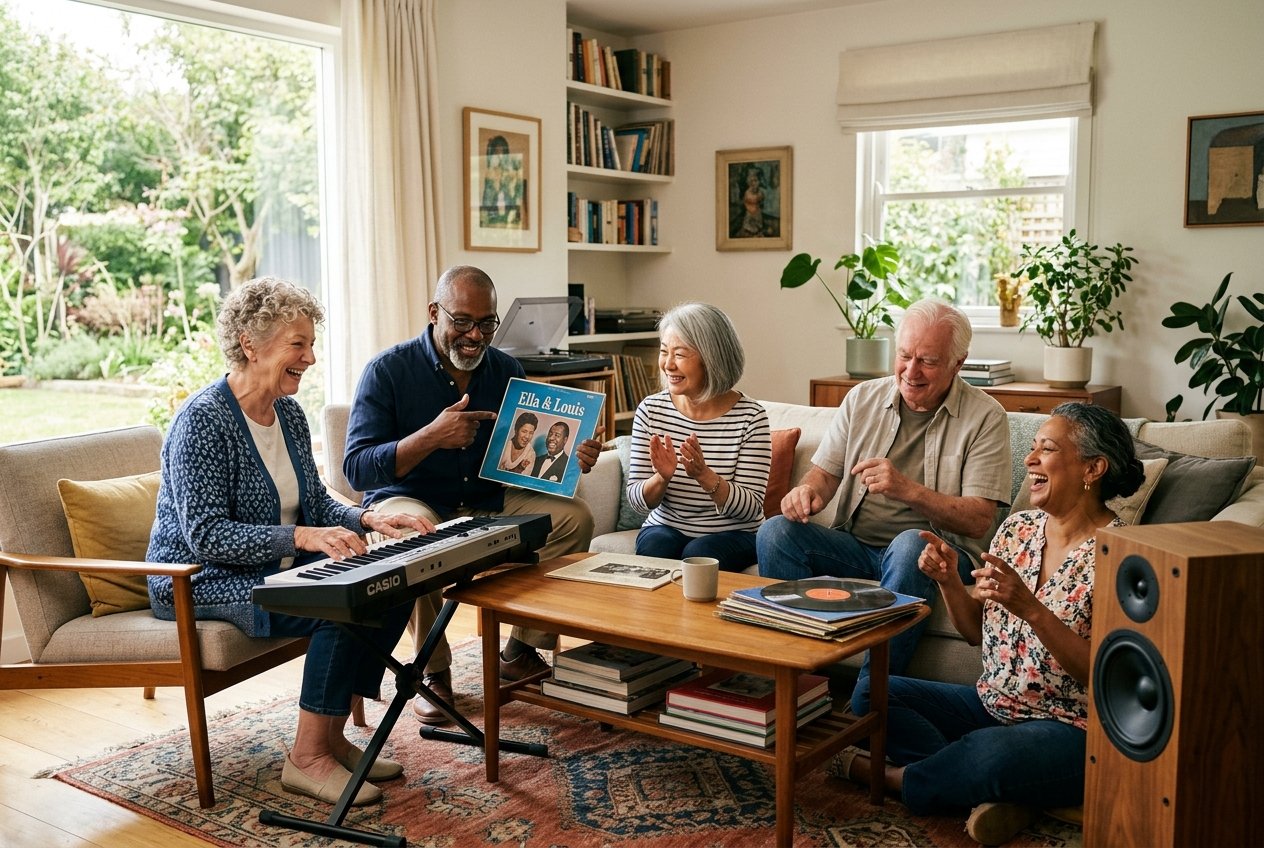
Music can make social interaction feel more natural for many groups and settings. Moreover, when conversation stalls, a familiar song provides a natural topic that people can relate to. This shared focus invites participation and reduces awkward silences for everyone, especially during group activities.
Additionally, people can sing, sway, name the performer, or share where they first heard it in a casual, comfortable setting. These moments spark stories that may not come up through direct questions yet they feel natural and engaging. Overall, people experience improved mood and stronger social bonds as conversations flow more easily.
For people living with dementia, familiar music may offer another way to participate and connect. A person who has difficulty following a conversation may still respond to the rhythm or recognize part of a well-loved song. Musical preferences remain personal, however. A collection labeled “music for seniors” is not automatically suitable. The most meaningful choices usually connect to the person’s own experiences, culture, faith, and tastes.
Music benefits for seniors
Physical Benefits
It can also offer physical benefits. Additionally, singing uses breathing and posture. Moreover, playing a simple percussion instrument encourages hand and arm movement. Furthermore, dancing—or moving the shoulders, feet or hands while seated—can make gentle activity more enjoyable. Each person should adapt the activity to current mobility, energy, and comfort rather than trying to keep pace with anyone else.
Structure and Purpose
Adds Structure and Purpose
Music can also add structure and purpose to the week. A regular choir rehearsal, community concert, music-appreciation group, or informal sing-along creates something to look forward to. These music benefits for seniors include routine, social contact, and mood support. These activities help focus daily life and reduce stress.
Additionally, someone who prefers staying home might schedule a weekly album afternoon. They can exchange playlists with relatives, or invite a friend over to watch a concert recording. Even a ten-minute music break can become a welcome routine. Many people find that regular music-related routines promote consistency.
To start, choose one familiar song. Sing or tap along, and notice how it feels. Ask what memories it brings up. Consider trying another version by a different performer. If you prefer, hum softly and listen for familiar rhythms.
Next, try playing a simple instrument. If playing feels intimidating, start with a simple instrument. Choose something that doesn’t require lessons, like a shaker or a hand drum. Moreover, use a different pleasant-sounding instrument. Additionally, use a radio or CD player with straightforward controls.
Perfection Not Required
Perfection Not Required
The benefits come less from the equipment than from the experience: choosing, remembering, creating and sharing. Music offers older adults a flexible way to express themselves and connect with others year-round.
For practical ways to bring more music into someone’s life, explore our companion guide, Seven Music-Related Gifts for Seniors, which includes listening devices, easy instruments, and activities.