
Practical Tips
- Weighted utensils can help steady the hand for individuals with tremors.
- Lightweight utensils may be better for those with limited strength.
Adaptive Utensil Set with Easy-Grip Handles
Adaptive utensil sets with built-up, easy-grip handles are designed to make eating more comfortable for individuals with limited hand strength, arthritis, or reduced dexterity. The wider handles are easier to hold and help reduce strain during meals.
This type of set typically includes a spoon, fork, and knife, offering a simple way to support independence at the table.
👉 View on Amazon:
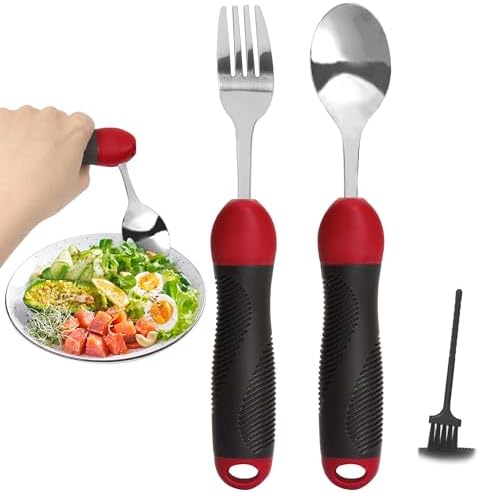
- 【Elderly Assistance Products】- Extended Adaptive Utensils, overall length 9.25”, enlarged style. – Check out this Swive…
- 【Occupational Therapy Gifts】Angled eating utensils are specially designed by occupational therapists. Adaptive Utensils …
- 【Weighted Special Supplies Spoon Fork Set】Weighted utensils Adaptive kitchen utensils, adaptive silverware for a variety…
Lightweight Adaptive Utensils for Comfortable Eating
Lightweight adaptive utensils are a helpful option for those who experience hand fatigue or weakness. The balanced design allows for easier control while eating, without requiring excessive grip strength.
These utensils are often dishwasher-safe and suitable for everyday use, making them a practical addition to daily routines.
👉 View on Amazon:
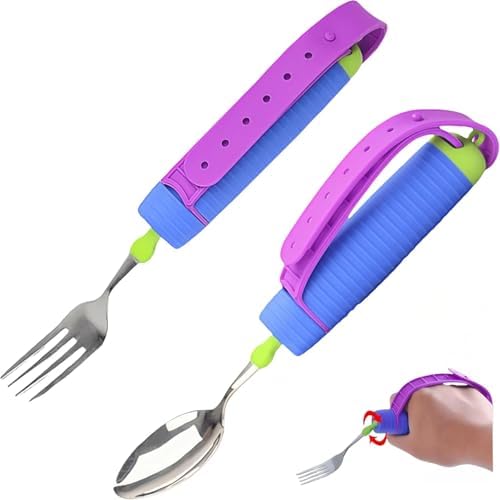
- Making Eating Easier: Our Adaptive Utensils design for Elderly, Arthritis, Weak Hand Grip & Disabled.The assistive utens…
- Non-slip Handles&Adjustable Straps: These come with non-slip handles and adjustable rubber straps for weak or trembling …
- Adaptive Design: Bendable utensils for custom use can be swiveled to different angles as the user needs, making them fee…
Angled Adaptive Spoon and Fork Set
Angled adaptive utensils are designed to reduce wrist movement and make it easier to bring food from plate to mouth. The angled heads support more natural motion, especially for individuals with limited range of motion or hand tremors.
This style can be especially helpful for maintaining independence during meals.
👉 View on Amazon:
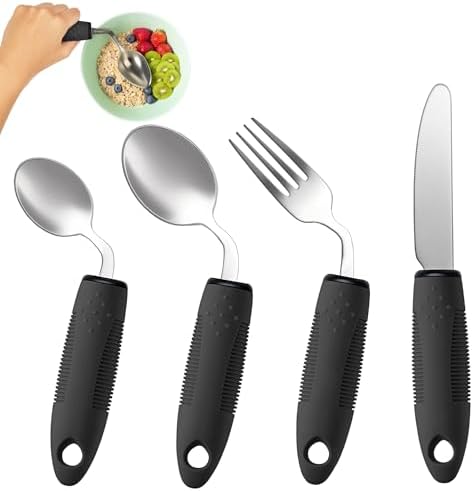
- ERGONOMIC 42° ANGLED DESIGN: Specially engineered for Parkinson’s patients, elderly, and those with hand tremors or arth…
- ADAPTIVE 2.5 oz WEIGHTED UTENSILS: Optimally weighted silverware provides stability for hand tremors without causing fat…
- BUILT-UP HANDLES FOR EASY GRIP: Large, textured handles with non-slip silicone grips. Ideal for limited hand mobility, a…
Easy-Grip Utensils for Limited Hand Strength
Easy-grip utensils feature thickened handles that are simpler to hold than standard flatware. They provide better control and stability for people who struggle with fine motor tasks.
These utensils are often recommended for older adults or anyone who benefits from extra grip support at mealtime.
👉 View on Amazon:

- Right-handed spoon is made from high quality stainless steel and attached to a 4.5″ plastic handle
- Offset spoons are perfect for individuals with limited wrist or hand range of motion due to arthritis, hand tremors, Par…
- Grip easy handle helps provide more control of the lightweight spoon for those with limited hand mobility
Adaptive Spoon with Raised Edge for Better Control
Adaptive spoons with a raised or curved edge help keep food from sliding off, making meals less frustrating. This design supports individuals with reduced coordination or hand control by improving stability while eating.
It’s a small adjustment that can make a noticeable difference in daily comfort.
👉 View on Amazon:

- Easy Eating with Deep Bowl Spoon: The spoon features a high-edged, deep-bowl design that minimizes spills and reduces sc…
- Anti Slip Weighted Grip Food Grade Tableware: These silverware are made of food grade stainless steel material and weigh…
- 45° Angled Design for Wrist Comfort: For people with arthritis or Parkinson’s, bending over 15° can exacerbate pain in 7…
Supporting Independence at the Table
Adaptive dining tools are small adjustments that can make a meaningful difference in everyday life. Utensils designed for comfort, stability, and ease of use help reduce frustration and support confidence, dignity, and independence during meals. For many older adults, feeling capable at the table is about more than eating—it’s about maintaining routine and self-respect.
Thoughtful choices in everyday tools can quietly improve comfort for both seniors and the caregivers who support them.
Caregiver Tip: Introduce Adaptive Utensils Gradually
Present them as a comfort or convenience upgrade rather than a necessity. Allow your loved one to try one utensil at a time and choose what feels best to them. Involving them in the decision helps preserve autonomy and increases acceptance.