Simple Changes That Make Everyday Spaces Safer
Introduction
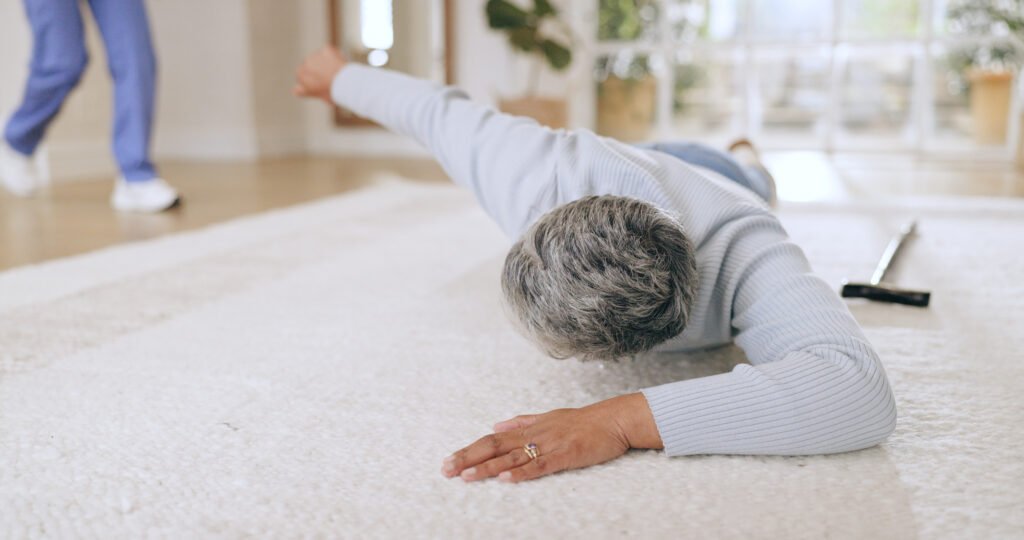
Falls often happen in familiar spaces like bedrooms and living rooms—especially during routine movements like getting out of bed or walking across the room. This guide highlights simple, practical ways to reduce fall risks and create a safer, more supportive home environment.
Why Focus on These Rooms?
Many people assume falls happen in bathrooms or on stairs. In reality, many occur in bedrooms and living areas, where individuals feel comfortable and may be less cautious.
These are spaces where:
- Lighting may be low, especially at night.
- Furniture may limit clear walking paths.
- Rugs and cords can become hidden hazards.
- Fatigue is more common (early morning or evening).
For older adults—particularly those with changes in balance, strength, or vision—these everyday environments can present real risks.
Common Fall Risks to Look For
1. Poor Lighting
Low lighting makes it harder to see obstacles, judge distances, and maintain balance.
Watch for:
- Dark pathways between the bed and bathroom
- No bedside lamp within reach
- Shadows along walkways
Simple fixes:
- Add touch lamps or motion-sensor lights.
- Use night lights along common paths.
- Make sure light switches are easy to reach.
2. Clutter and Narrow Walkways
Even small items can become obstacles, especially when mobility is limited.
Watch for:
- Items stored on the floor.
- Furniture placed too close together.
- Stacks of magazines, boxes, or décor,
Simple fixes:
- Create clear, wide walking paths.
- Keep frequently used items within easy reach.
- Arrange furniture to support safe movement, especially if using a walker or cane.
3. Rugs, Smooth Flooring, and Slippery Surfaces
Rugs are one of the most common causes of preventable falls—but they are not the only concern. Smooth flooring surfaces such as tile, vinyl, and hardwood can also increase fall risk, especially when wet or when transitioning from one surface to another.
Watch for:
- Rugs without non-slip backing
- Curled or uneven rug edges
- Smooth tile or vinyl flooring, especially in bathrooms or near sinks
- Transitions from carpet to hard flooring
- Wet areas near bathrooms or entryways
- Walking in socks on smooth floors
Simple fixes:
- Remove throw rugs or secure them with non-slip pads.
- Choose low-pile, flat rugs.
- Use non-slip bath mats in and around bathroom areas.
- Add slip-resistant strips or textured surfaces where needed.
- Keep floors dry and clean up spills promptly.
- Encourage the use of non-slip footwear instead of socks.
Caregiver tip:
Pay close attention to movement between the bedroom and bathroom—especially at night. Changes in lighting, flooring, and balance all come together during this transition, increasing fall risk.
4. Unsafe Bed Height and Transfers
Getting in and out of bed is a high-risk moment for falls.
Watch for:
- A bed height that is too high or too low
- Difficulty standing up from the bed
- Lack of support when rising
Simple fixes:
- Adjust bed height so feet rest flat on the floor.
- Add a bed rail or assist handle.
- Place a stable chair or support surface nearby.
5. Electrical Cords and Hidden Hazards
Cords are easy to overlook but can quickly become tripping hazards.
Watch for:
- Extension cords across walking paths.
- Loose or tangled wires.
- Charging cables near beds or chairs.
Simple fixes:
- Route cords along walls.
- Use cord covers or organizers.
- Reduce unnecessary cords in walking areas.
Creating a Safer Daily Routine
Fall prevention is not only about the environment—it is also about daily habits.
Encourage:
- Slower transitions (sit before standing, pause before walking)
- Proper footwear with good traction
- Keeping essential items nearby (glasses, phone, medications)
- Consistent routines to reduce rushing
When to Take a Closer Look
Consider a more thorough safety review if you notice:
- Recent falls or near-falls.
- Increased reliance on furniture for support.
- Hesitation or fear when walking.
- Changes in balance, strength, or vision.
These may be early warning signs that adjustments are needed. Also, be sure to address falls, even near-falls, to the primary care physician.
Final Thought
Bedrooms and living areas should feel comfortable—but they also need to support safe movement.
The goal is not to remove everything, but to create a space that is:
- Easier to navigate
- More stable
- More predictable
Often, the most effective changes are also the simplest.