
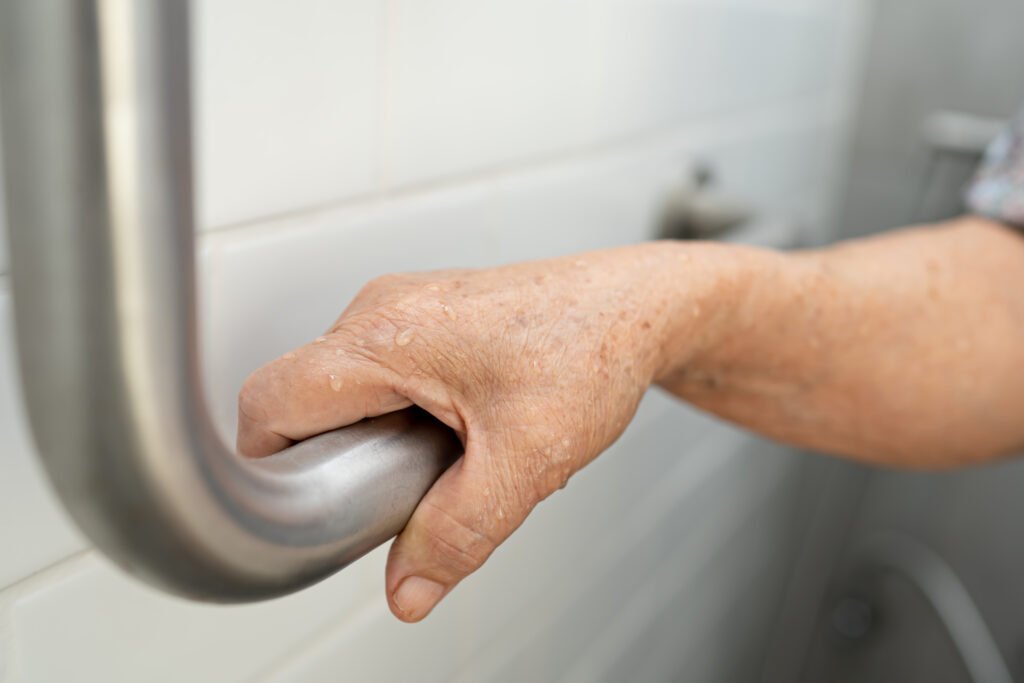
For many older adults, staying safe at home is not just about avoiding falls. It is about being able to move through the day with more confidence — getting out of bed, stepping into the shower, using the toilet, standing from a chair, or getting in and out of a car.
Grab bars and support rails can make a meaningful difference, but they are not all the same. Some are designed for showers. Others are made for beds, toilets, cars, or general household use. Choosing the right one depends on where the person needs help, how much support they require, and whether the device is truly secure.
The goal is not to make the home look medical, but rather, to make daily movement safer, easier, and less stressful.
Why Grab Bars and Support Rails Matter
Falls often happen during ordinary activities: bathing, toileting, getting out of bed, standing up too quickly, or stepping over a threshold. These are moments when balance, strength, coordination, and reaction time all matter.
A well-placed grab bar or support rail can help an older adult:
Maintain balance while standing or turning
Push up from a seated position
Steady themselves while stepping into a shower or tub
Transfer more safely from bed, chair, toilet, or car
Reduce the need to grab unsafe objects such as towel bars, sink edges, shower doors, or furniture
It is important to remember that not every support device is meant to hold full body weight. Some are designed for balance only. Others are stronger and intended to assist with transfers. Always check the product’s weight rating, installation requirements, and intended use.
Bathroom Grab Bars: One of the Most Important Safety Upgrades
The bathroom is one of the most common places where falls occur. Wet floors, slippery tubs, low toilets, and tight spaces can make simple movements risky.
Bathroom grab bars may be useful near:
The shower entrance
Inside the shower or tub
Beside the toilet
Near a bathtub wall
Along a bathroom wall where the person turns or steps
A properly installed wall-mounted grab bar is usually more secure than a suction-style bar. Suction grab bars may be helpful for light balance support, but they should not be relied on for pulling up, lifting body weight, or preventing a serious fall unless the product specifically says it is designed and tested for that purpose.
For shower safety, look for grab bars with:
A non-slip grip
A secure installation method
Rust-resistant material
A comfortable diameter for the hand
Professional installation when wall studs or anchors are needed
A towel bar is not a grab bar. It may come loose if someone grabs it during a slip.
Toilet Safety Rails and Grab Bars
Getting on and off the toilet can become difficult when someone has weak legs, painful knees, hip problems, balance issues, or fatigue. Toilet safety rails can provide support on one or both sides of the toilet.
There are several types:
Wall-mounted grab bars beside the toilet
Toilet-mounted safety frames
Freestanding toilet rails
Raised toilet seats with handles
The best option depends on the bathroom layout, the person’s strength, and whether they need steadying support or help pushing up. A raised toilet seat may reduce the distance the person has to lower themselves, while side rails can help with balance and standing.
Make sure any toilet rail is stable, properly fitted, and does not shift during use.
Shower Chairs and Transfer Benches
Although not technically grab bars, shower chairs, and transfer benches are closely related safety items. They are often used along with grab bars.
A shower chair allows the person to sit while bathing, reducing fatigue and the risk of slipping. A transfer bench may be useful when stepping over a bathtub wall is difficult or unsafe. With a transfer bench, the person can sit outside the tub and slide over into the bathing area.
These products may be especially helpful for someone who:
Gets tired while standing
Has poor balance
Has arthritis or joint pain
Is recovering from surgery or illness
Feels anxious about falling in the shower
A grab bar helps with balance and positioning. A shower chair or bench reduces the need to stand for the entire bath.
Bed Rails and Bed Assist Handles
Getting in and out of bed can be difficult for older adults who have weakness, stiffness, dizziness, pain, or reduced mobility. A bed rail or bed assist handle can provide a secure place to hold while repositioning, sitting up, or standing.
There are different types of bed support products:
Small bed assist handles
Longer bed rails
Adjustable rails
Rails with storage pockets
Floor-to-bed support poles
A bed assist handle is usually intended to help with sitting up and transferring out of bed. Longer rails may also help prevent rolling out of bed, but they must be selected carefully.
Bed rails require extra caution. In some situations, they can create an entrapment risk if there are gaps between the mattress, rail, and bed frame. The rail should fit securely, and the user should be able to understand and use it safely.
Consider a bed rail or assist handle when the person:
Struggles to sit up from lying down
Needs something stable to hold when standing
Has difficulty repositioning in bed
Is using nearby furniture unsafe for support
Chair Assist Rails and Couch Supports
Many older adults have trouble standing from soft chairs, low sofas, or recliners. A support rail near a favorite chair can help, especially if the person tends to rock, push on unstable furniture, or pull on a table to stand.
Chair assist products may include:
Stand-assist frames
Couch canes
Chair-side support rails
Lift chairs
Portable support handles
The main issue is stability. If the support device slides, tips, or does not fit properly under or around the chair, it may increase rather than reduce the risk.
A lift chair may be helpful when leg weakness is significant, but the person should still be able to stand safely once raised. A lift chair does not replace the need for balance and walking safety.
Car Assist Handles
Getting in and out of a car can be surprisingly difficult, especially when the car is low, the seat is deep, or the person has knee, hip, back, or balance problems. A car assist handle can provide extra support during transfers.
Some car assist handles fit into the door latch area and create a temporary handle for the person to push against while standing. Other products attach to the car frame or seatbelt area.
These can be useful when the person:
Has difficulty rising from the car seat
Needs extra support while turning
Feels unsteady stepping out of the car
Cannot safely grab the door or dashboard
Before using a car assist handle, make sure it is compatible with the vehicle and that the person can use it correctly. It should not interfere with closing the door, seatbelt use, or safe positioning.
Floor-to-Ceiling Support Poles
A floor-to-ceiling support pole can be placed near a bed, chair, toilet, or other transfer area. Some include a curved handle that allows the person to grasp and pivot.
These can be helpful when wall-mounted grab bars are not practical or when support is needed in an open area. However, they must be installed according to the manufacturer’s instructions and checked regularly for stability.
A support pole may be useful near:
A bed
A recliner
A bathroom area
A favorite chair
A transfer spot where there is no wall nearby
This type of product may be especially helpful when the person needs a steady handhold but does not require full lifting assistance.
Portable Grab Bars: Use With Caution
Portable or suction grab bars are popular because they are easy to install and do not require drilling. However, they are not always appropriate for older adults who need strong support.
They may work best for:
Temporary light balance support
Travel situations
Smooth, non-porous surfaces
A person who does not pull heavily on the bar
They may not be safe for:
Supporting full body weight
Pulling up from sitting
Use on textured tile or uneven surfaces
Someone with significant balance problems
A person who may grab suddenly during a slip
If a grab bar can be removed easily, it may not be secure enough for serious support.
What to Look for Before Buying
Before choosing any grab bar or support rail, consider these questions:
Where does the person need help most — shower, toilet, bed, chair, or car?
Is the person using nearby furniture, towel bars, doors, or counters for support?
Does the person need balance support, or do they need help lifting body weight?
Can the product be installed securely?
Is the surface strong enough to hold the device?
Does the person understand how to use it safely?
Is the product rated for the person’s weight?
Could the device create a tripping, pinching, or entrapment hazard?
The safest product is not always the one that looks easiest to install. It is the one that fits the person, the environment, and the level of support needed.
When Professional Help May Be Needed
Some grab bars and rails are simple to install, but others should be installed by a professional, especially in bathrooms. A poorly installed grab bar can give a false sense of security.
Professional installation may be wise when:
The bar must be mounted into the wall studs
Tile drilling is required
The wall structure is uncertain
The person has a high fall risk
The grab bar will be used for weight-bearing support
Several areas of the home need safety upgrades
An occupational therapist, physical therapist, aging-in-place specialist, or knowledgeable home safety professional may also help identify where support is actually needed.
Final Thoughts
Grab bars and support rails can help older adults remain safer and more independent, but they should be chosen carefully. A shower grab bar, bed rail, toilet rail, chair support, and car assist handle all serve different purposes.
The right product should match the person’s daily routine, strength, balance, and home environment. When properly selected and installed, these simple supports can make everyday movement feel safer, steadier, and less overwhelming.
Small changes in the right places can help an older adult move through the day with more confidence — and give family members greater peace of mind.